
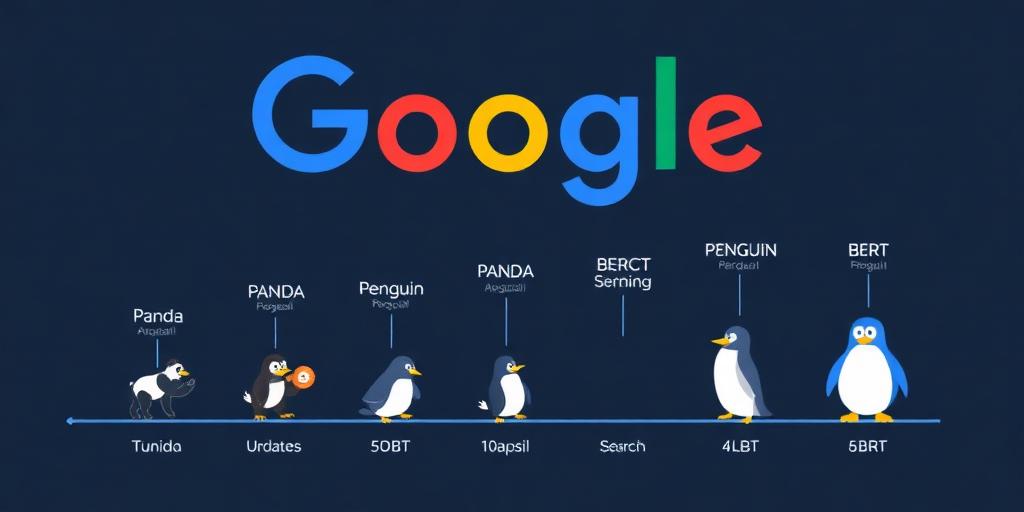
A Brief History of Google Algorithm Changes
Google's search algorithm is a constantly evolving beast. Over the years, it has undergone numerous updates and changes, all in the pursuit of delivering the most relevant and high-quality search results to users. Understanding these changes is crucial for anyone involved in SEO or digital marketing. Let's delve into a brief history of some of the most significant Google algorithm updates.
Early Days and PageRank
In the early days of Google, the algorithm heavily relied on PageRank, a system that evaluated the importance of a webpage by analyzing the quantity and quality of links pointing to it. While PageRank is still a factor, its influence has diminished over time as Google has incorporated more sophisticated ranking signals. This focus on backlinks made early SEO heavily reliant on link building strategies.
Panda (2011)
Panda was a major update aimed at combating low-quality content, often referred to as "content farms." This update penalized websites with thin content, duplicate content, and excessive advertising. Panda emphasized the importance of original, valuable, and user-friendly content.
Penguin (2012)
Penguin targeted websites engaging in manipulative link building practices, such as buying links or participating in link schemes. This update aimed to reward websites with natural and organic link profiles while penalizing those trying to game the system. Penguin made it clear that quality over quantity was the way forward for link building.
Hummingbird (2013)
Hummingbird represented a significant overhaul of Google's search algorithm. It focused on semantic search, aiming to better understand the user's intent behind a query rather than just matching keywords. Hummingbird enabled Google to provide more accurate and relevant results, even for complex or conversational search queries.
Mobilegeddon (2015)
With the increasing use of mobile devices, Google launched Mobilegeddon, an update that favored mobile-friendly websites in mobile search results. This update emphasized the importance of having a responsive website design that adapts to different screen sizes. Websites that were not mobile-friendly saw a significant drop in mobile rankings.
RankBrain (2015)
RankBrain is a machine learning system that helps Google process search results and provide more relevant answers. It uses artificial intelligence to understand the context of a search query and identify the most relevant results. RankBrain is one of the top three ranking factors in Google's algorithm, highlighting the importance of AI in modern search.
BERT (2019)
BERT (Bidirectional Encoder Representations from Transformers) is another AI-powered update that further improved Google's understanding of natural language. BERT allows Google to better understand the nuances of search queries, including prepositions and context words, leading to more accurate and relevant results. This update significantly impacted long-tail keywords and conversational search.
Core Updates (Ongoing)
In addition to these major updates, Google regularly releases smaller core updates that refine the algorithm and address specific issues. These updates can impact search rankings and it's important to stay informed about the latest changes.
Conclusion
Google's algorithm is constantly evolving, and staying up-to-date with the latest changes is essential for maintaining a strong online presence. By focusing on creating high-quality content, building natural links, and providing a user-friendly experience, you can improve your chances of ranking well in Google search results. Understanding the history of these algorithm changes provides valuable insight into the direction Google is heading and the best practices for SEO in the long term.


